Driving Innovation in Aerospace and Defense: From Chip to Mission
-1.png?width=300&height=62&name=Fluid___Codes_Logo_colored-Icon_white-font%20(2)-1.png "Fluid___Codes_Logo_colored-Icon_white-font (2)-1")

Driving Innovation in Aerospace and Defense: From Chip to Mission
Join us for an exclusive technical Half-Day Lunch & Learn
Date: Thursday, 8 October 2026
Time: 08:00 - 14:00 EEST (GMT+3)
Location: The Venue - Hall, Incubator Building, Sofia Tech Park
Address: 111 Tsarigradsko Shose Blvd., Sofia 1784
Format: In-Person Technical Briefing & Networking Lunch
Event Language: Bulgarian
Engineering the complete system, from individual components to mission performance
Modern aerospace and defense systems are becoming increasingly interconnected. Performance at the mission level can depend on decisions made across structures, aerodynamics, electronics, thermal management, communications, radar, sensors and system architecture.
Engineering these domains independently can make it difficult to understand how changes in one part of the system influence performance elsewhere.
Join Fluid Codes, an Elite Channel Partner of Ansys (part of Synopsys), in Sofia for a focused technical Lunch & Learn exploring how simulation and digital engineering can help connect engineering decisions from chip and component level through complete platforms and mission environments.
Through technical presentations and engineering examples, we will explore how integrated multiphysics simulation, Model-Based Systems Engineering and Digital Mission Engineering can support the development and validation of increasingly complex aerospace and defense systems.
With opportunities for technical discussion and networking throughout the event, this session is designed for engineers, analysts, technical leaders and R&D teams working across aerospace, defense, electronics and mission-critical systems.
In-person seating is limited. Register early to secure your place.
Key takeaways from this session:
-
Connect Component-Level Engineering to Mission Outcomes
Explore how Model-Based Systems Engineering (MBSE) and Digital Mission Engineering (DME) can connect system architecture, physics-based simulation and operational scenarios, helping engineering teams understand how design decisions can influence overall system and mission performance.
-
Improve Performance Across Multiple Physics Domains
Discover simulation approaches for addressing structural integrity, aerodynamics, electronics reliability and thermal management, enabling engineers to evaluate complex interactions and make informed design decisions earlier in development.
-
Evaluate Advanced Radar, Communications and Sensor Systems
Learn how electromagnetic and optical simulation can support the development and evaluation of radar, Synthetic Aperture Radar (SAR), communication systems, optics and EOIR sensors across increasingly demanding aerospace and defense environments.
-
Build More Connected Digital Engineering Workflows
See how engineering teams can bring individual disciplines together within a connected digital workflow, moving from detailed component analysis toward complete system and mission-level evaluation.
Agenda
08:00 - 09:00 - Morning coffee & Registration
09:00 - 09:20 - Introduction and Session Opening
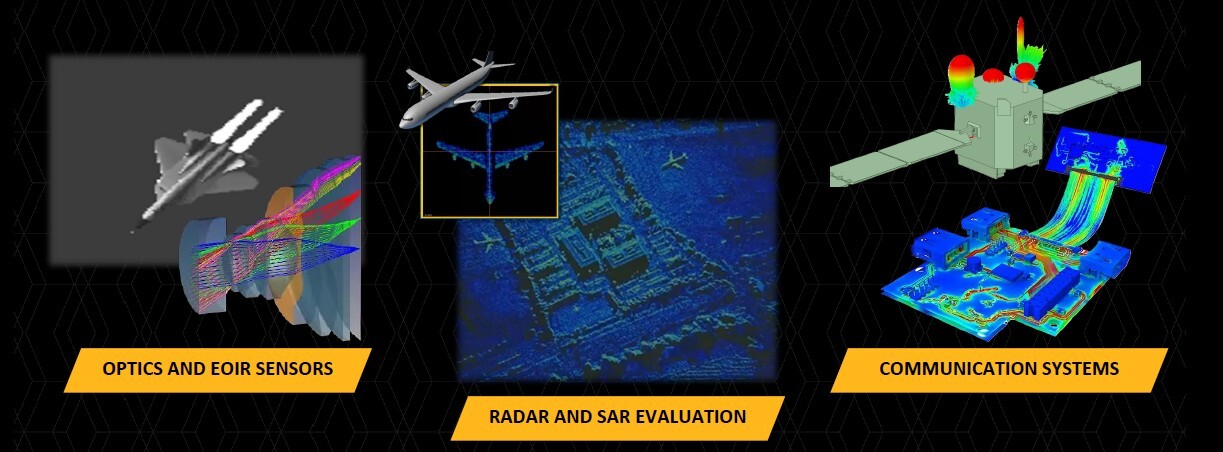
09:20 - 10:00 - Radar, SAR, Communication Systems, Optics & EOIR Sensors
Modern aerospace and defense platforms increasingly depend on sophisticated sensing, communications and electromagnetic systems. Explore how simulation can support the engineering and evaluation of antennas, radar and SAR systems, RF communications, optical systems and EOIR sensors. We will look at how electromagnetic and optical modeling can help engineers understand system behaviour, interaction with the surrounding environment and performance across the electromagnetic spectrum.
10:00 - 10:40 - Structural Mechanics, Electronics Reliability & Thermal Management
Aerospace and defense systems must operate reliably under demanding mechanical and thermal conditions while continuing to meet stringent size, weight and performance requirements. Explore how simulation can support the assessment of structural behavior, mechanical integrity, electronics reliability and thermal performance, allowing engineers to investigate design challenges before committing to costly physical prototypes. The session will also look at how different physics disciplines can be considered together when evaluating increasingly compact and integrated electronic systems.
10:40 - 11:10 - Coffee Break
11:10 - 12:00 - High-Fidelity CFD for Aerodynamics, Propulsion & Thermal Management
Aerodynamic performance influences everything from aircraft and UAV efficiency to stability, propulsion performance and thermal behavior. Discover how high-fidelity computational fluid dynamics can help engineering teams analyse complex flow phenomena, evaluate aerodynamic designs and investigate performance across different operating conditions. he session will explore how simulation-driven workflows can support faster design exploration and provide engineers with greater insight into aerodynamic behaviour earlier in development.
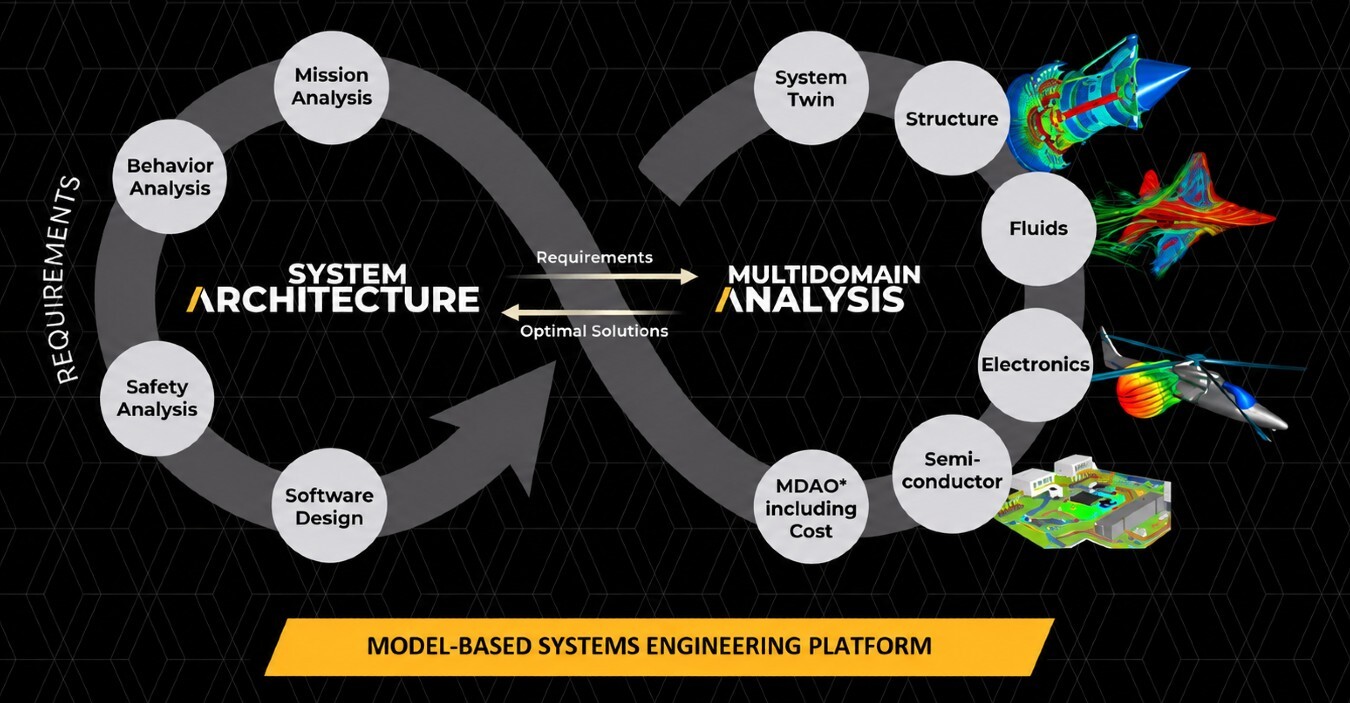
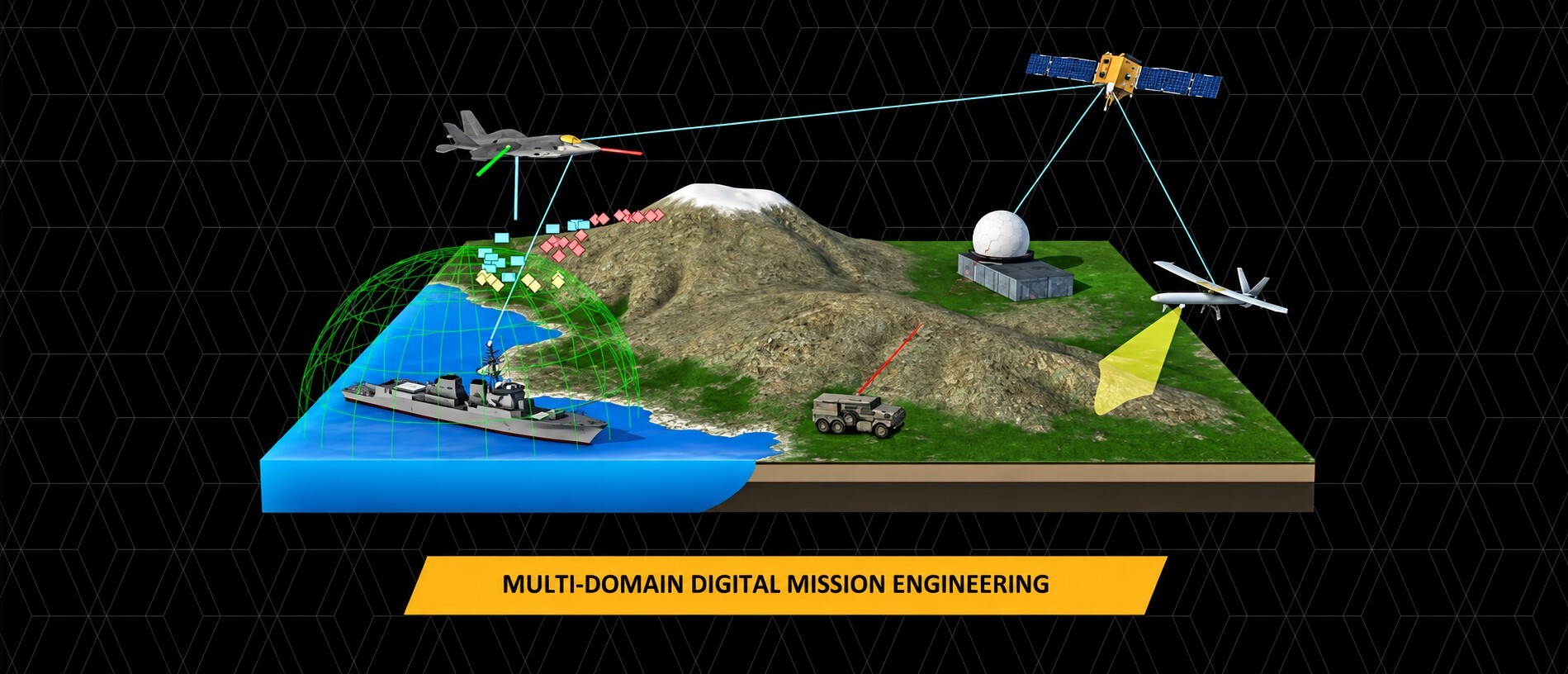
12:00 - 12:40 - Model-Based Systems Engineering & Multi-Domain Digital Mission Engineering
Complex aerospace and defense platforms involve numerous interacting subsystems, operating environments and mission requirements. This session will explore how Model-Based Systems Engineering (MBSE) can support system architecture and requirements-driven engineering, while Digital Mission Engineering extends analysis into the operational environment. Discover how engineering teams can connect detailed simulation models, system behavior and mission scenarios to evaluate how design choices may affect performance at the platform and mission level.
12:40 - 13:00 - Closing remarks
13:00 - 14:00 - Networking Lunch
Event Language: Bulgarian
From Chip to Mission: Connecting the Digital Engineering Workflow
Bringing these engineering domains together creates opportunities to evaluate more than individual component performance.
This closing technical discussion will explore how connected simulation and digital engineering workflows can help teams move from component and subsystem analysis to platform-level and mission-level understanding, supporting more informed engineering decisions throughout the development lifecycle.
Networking Lunch & Technical Discussion
Continue the conversation with Fluid Codes specialists and fellow engineering professionals over lunch.
Who Should Attend?
This Lunch & Learn is particularly relevant for professionals involved in:
- Aerospace and defense engineering
- Aircraft, UAV and autonomous systems
- Systems engineering and MBSE
- Mission and operational analysis
- Structural and mechanical engineering
- Aerodynamics and CFD
- Electronics and thermal engineering
- RF, antenna, radar and SAR engineering
- Communication systems
- Optical and EOIR systems
- R&D and advanced engineering
- Engineering management and technical leadership
Secure Your Spot
Join us in Sofia for a focused technical session exploring how simulation and digital engineering can connect engineering decisions across the aerospace and defense development lifecycle, from chip to mission.
Exchange ideas with technical specialists, explore multidisciplinary simulation workflows and connect with other engineering professionals working on complex aerospace and defense challenges.
Seats are limited for this in-person event.
Location
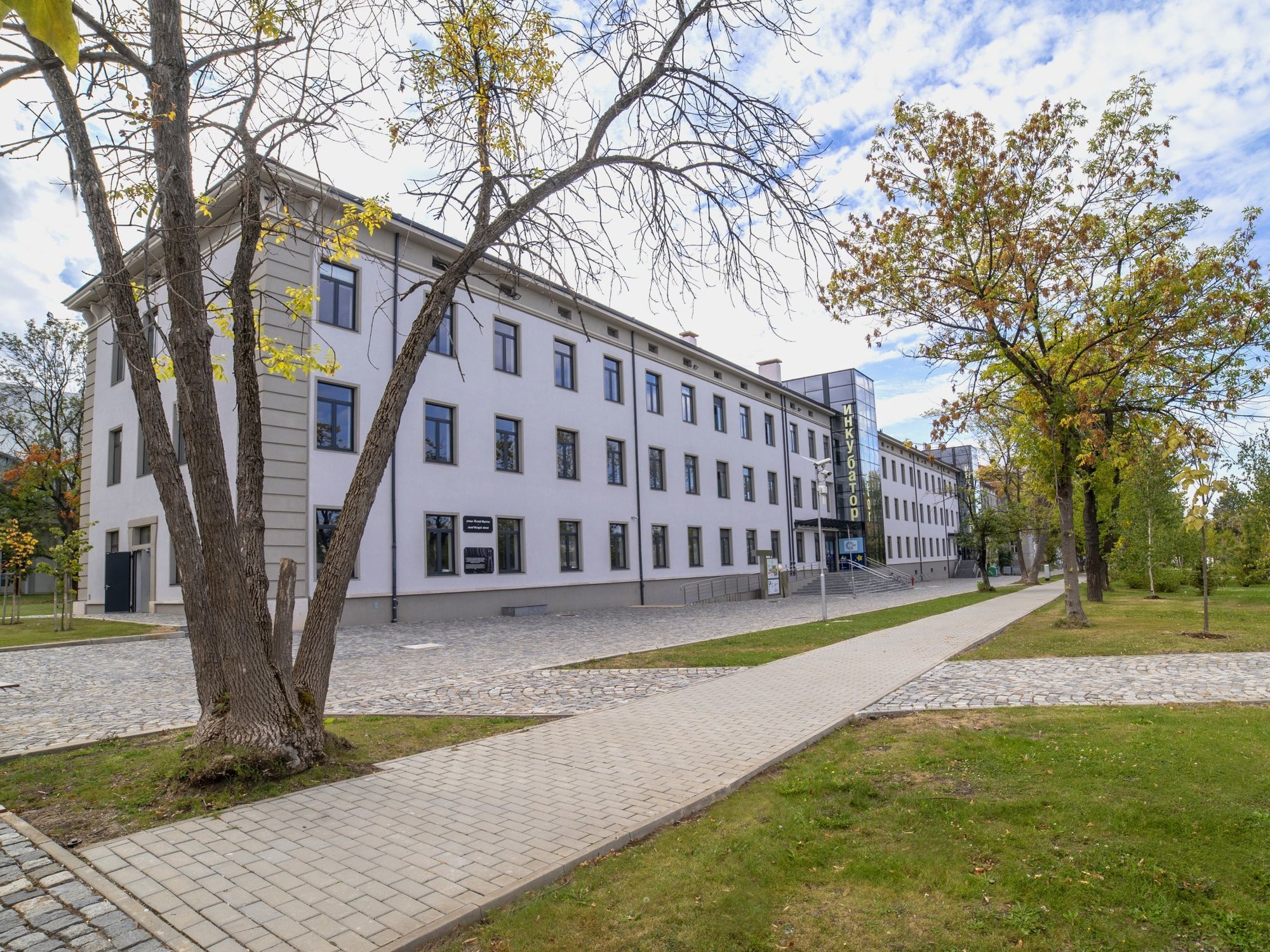
The Venue Hall, Incubator Building, Sofia Tech Park
Getting There:
The event will take place at The Venue - Hall inside the Incubator Building at Sofia Tech Park, located on Tsarigradsko Shose Boulevard. Sofia Tech Park is located close to Aviation Square (4th Kilometre), with Arena Sofia nearby, making the venue easy to identify and access.
Google Maps:
Click here